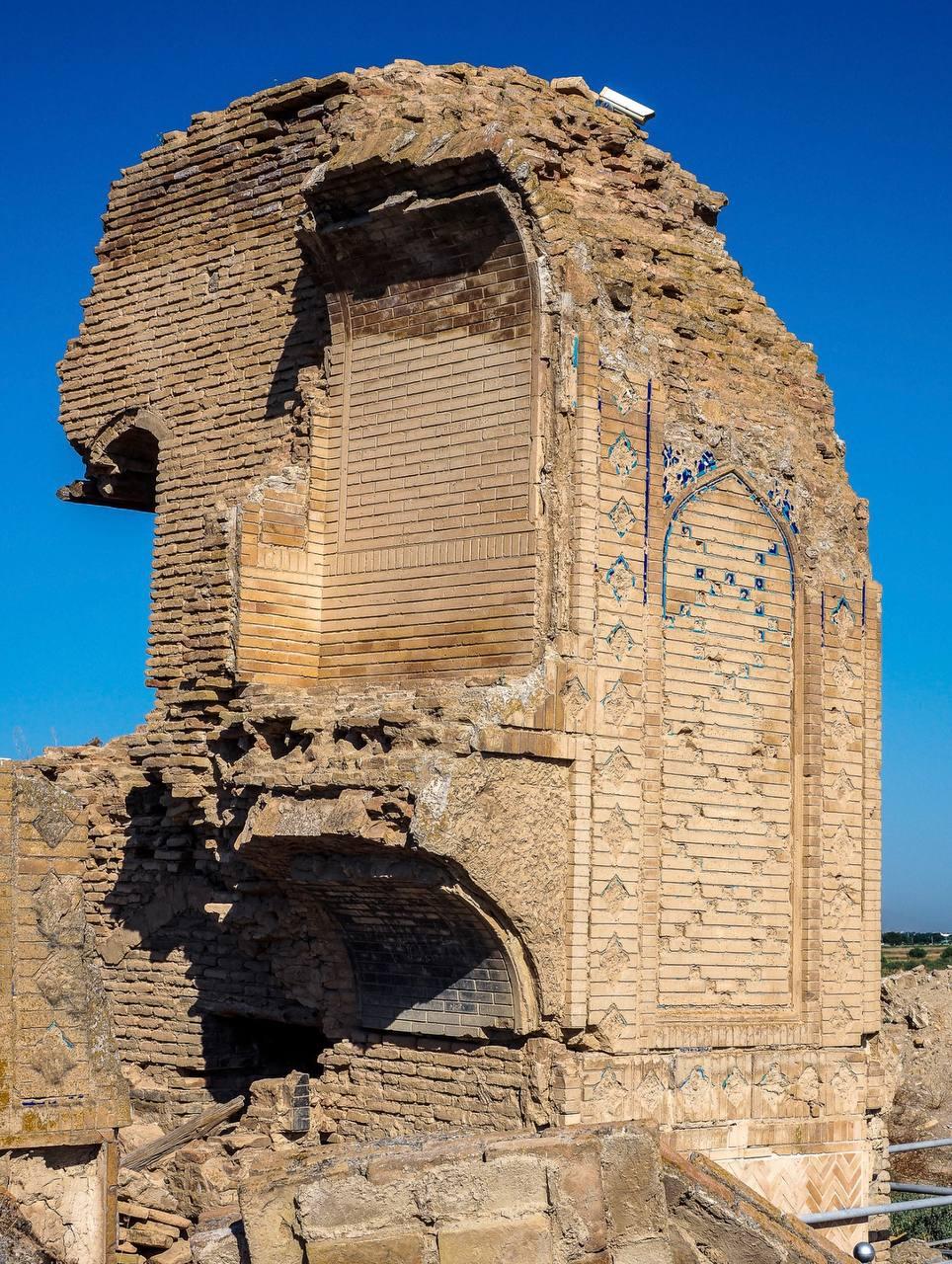
The portal of this mosque is decorated with two yellow dragons, facing one another against a deep-blue mosaic background. No comparable decoration exists anywhere else in the Islamic architecture of Central Asia. The Sher-Dor Madrasa in Samarkand features tigers, the Nadir Divan-Begi Madrasa in Bukhara displays mythical Simurgh birds — but the dragons of the Seyt Jemal ad-Din Mosque are a unique example within all of Islamic architecture in Asia.
The complex was built in the mid-15th century and comprised four structures: the mosque itself with a central dome, a tomb in front of it and two large wings with tall domed halls. The building stood on a high hill near the ancient settlement of Anau, 12 kilometres from Ashgabat, and was once known simply as the "House of Beauty."
The mosque was destroyed by the catastrophic Ashgabat earthquake of 1948. Today, what remains are ruins, fragments of mosaic and a partially preserved portal — yet even this is enough to grasp the scale of the loss. Fragments of the famous dragon decoration can now be seen at the Museum of Fine Arts in Ashgabat. The site itself remains a place of pilgrimage — despite the ruins, or perhaps because of them.