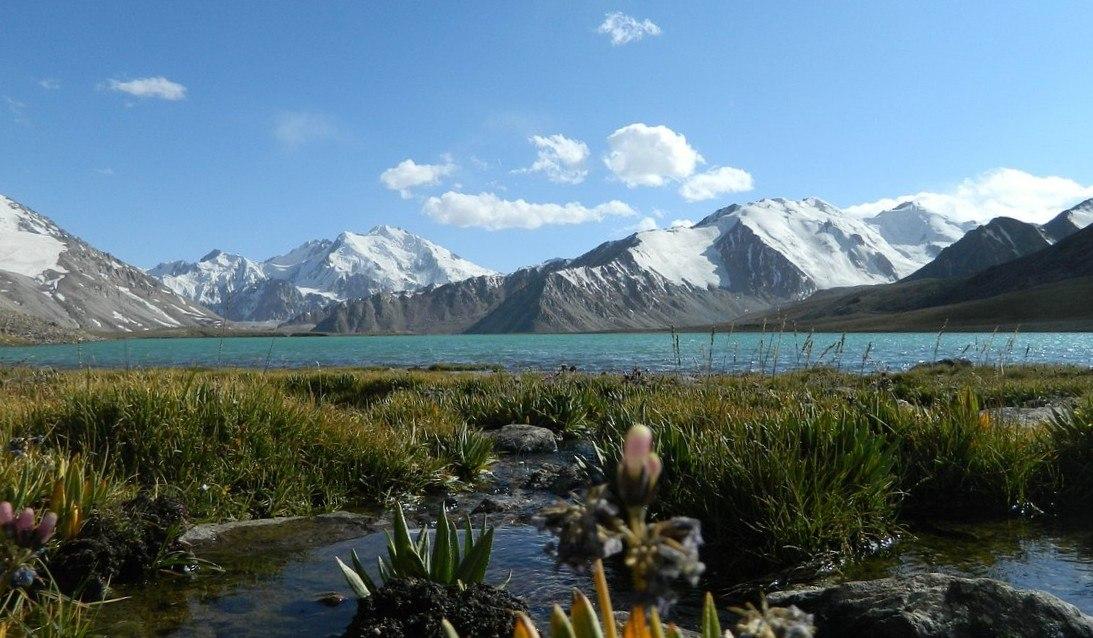
"The Roof of the World" — that is what the Pamir has been called for centuries, and it is no metaphor. The average elevation of the plateau exceeds 4,000 metres above sea level. This is where the familiar world ends and something else begins — harsh, boundless and utterly mesmerising.
Ismoil Somoni Peak is the highest summit in the former Soviet Union, standing at 7,495 metres. The Pamir is also home to two more seven-thousanders — Abu Ali ibn Sino Peak at 7,134 metres and Korzhenevskaya Peak at 7,105 metres. Mountaineers travel here from every corner of the world for exactly this: a true test of limits.
The Fedchenko Glacier is the longest glacier in the world outside the polar regions, covering an area of around 700 square kilometres. Nearby lies Lake Karakul, which scientists believe formed in a crater left by a meteorite impact.
The Pamir has its own historical mystery too. According to legend, the region fell within the reach of Alexander the Great's conquests, and some of the fair-haired, light-eyed Pamiris are said to be descendants of his soldiers. Whether this is true or not, nobody knows for certain — and that uncertainty only makes the Pamir more compelling. In 2013, Tajikistan's National Park was inscribed on the UNESCO World Heritage List. The Pamir Highway, hot springs, high-altitude nomads, Marco Polo sheep on the slopes — none of this is scenery. It is life, lived at the height of the clouds.