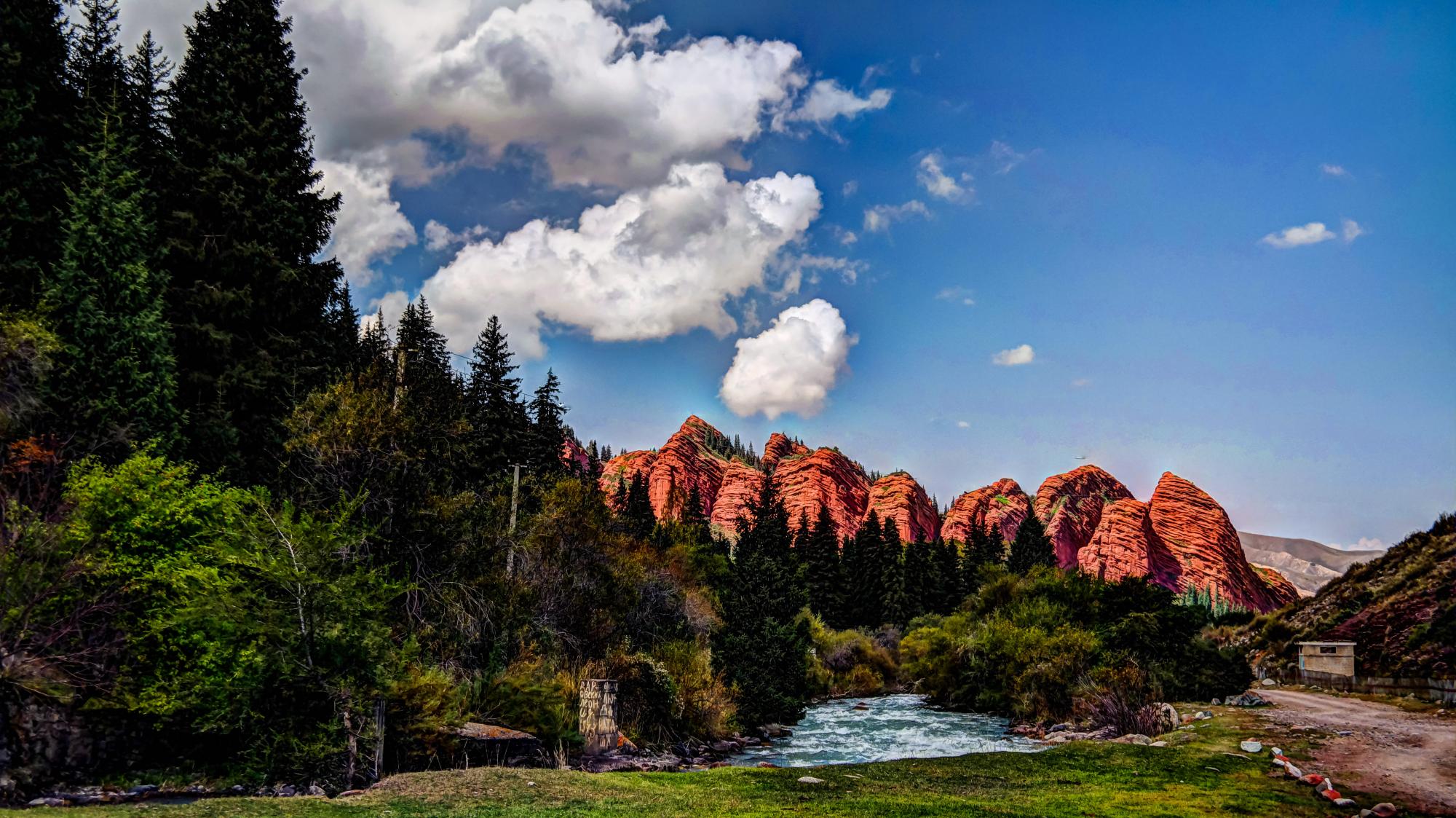
"Seven bulls" — that is what Jeti-Oguz means, and the name is no accident. At the entrance to the gorge stand seven monumental red rocks that, from a distance, look uncannily like bulls resting in the grass. The landscape is so striking that the rocks made it onto Soviet postage stamps back in 1968. The gorge stretches 37 kilometres along the northern slopes of the Terskei Ala-Too range, 28 km west of Karakol. Right beside the Seven Bulls rocks rises another famous landmark — the Broken Heart rock. Couples make special trips here to propose or simply to be photographed against this natural sculpture. Deeper into the gorge, an entirely different world opens up. The Jeti-Oguz sanatorium operates here, drawing visitors to its thermal springs, while a little further along the trail the "Maiden's Braids" waterfall rushes and tumbles. In the village at the gorge entrance, an ancient cemetery and burial mounds dating back to the 7th–5th centuries BC still stand — a reminder that people have treasured this place for millennia.
At the very top of the valley, the twin summit of Oguz-Bashy — "the head of the bull" — rises to 5,170 metres. Only experienced mountaineers make it that far. For everyone else, there are horseback rides, trekking trails and nights spent in a yurt camp beneath the star-filled sky of the Tian Shan.