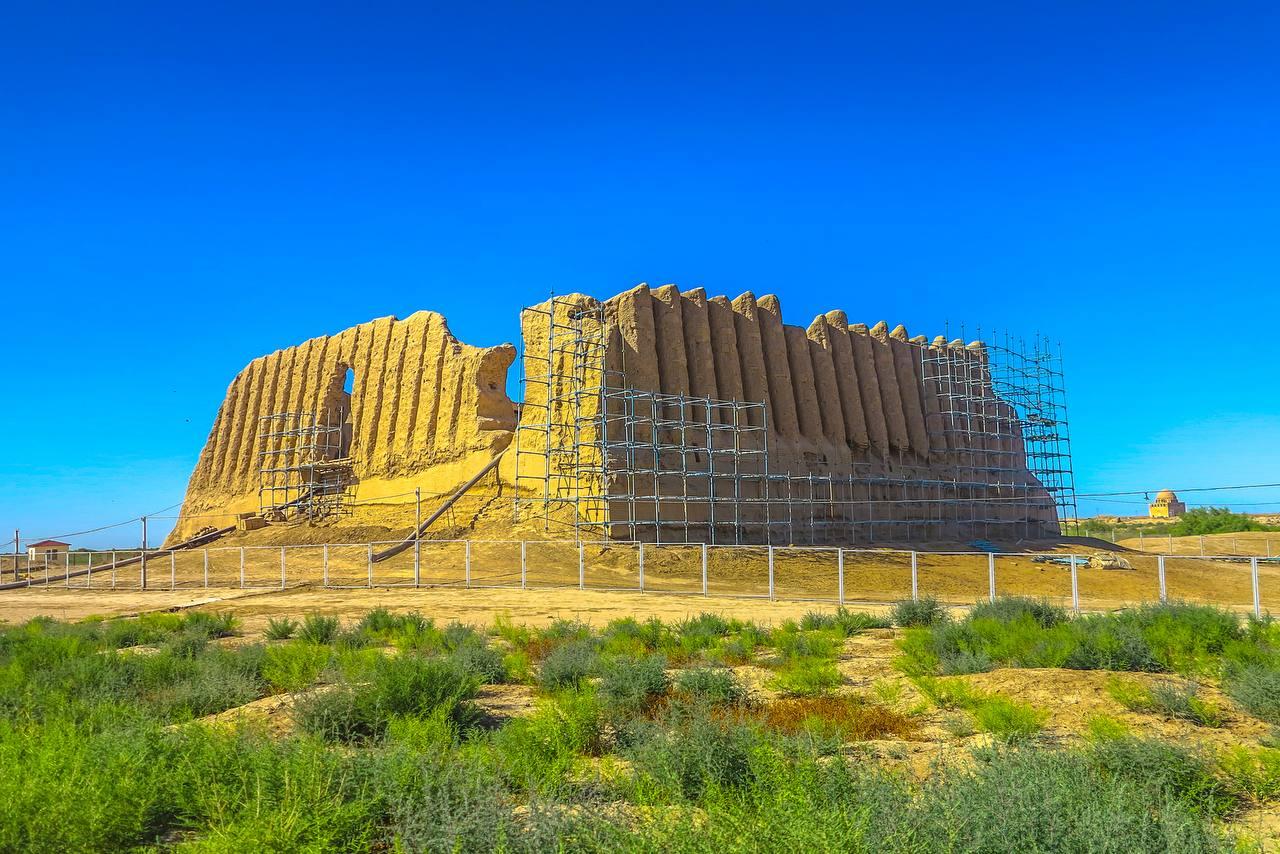
At the turn of the 12th–13th centuries, Merv was considered the largest city in the world, with a population exceeding half a million and a shakhristan covering 350 hectares. The geographer Yaqut al-Hamawi wrote that the city and its buildings could be seen from a day's journey away. It's hard to imagine, but right here, among today's sand dunes and ruins, an enormous Muslim capital once thrived.
Merv stood on the banks of the Murghab River, in the south-eastern part of modern-day Turkmenistan, and across different eras served as the capital of the satrapy of Margiana and of the Turkic Seljuk Empire, becoming a major centre of Islamic scholarship along the way. Its golden age ended tragically: in 1221 the city fell to the Mongols, and chronicles speak of the near-total destruction of its population.
Today, several settlements from different eras survive on the site — Erk-Kala, Gyaur-Kala, Kyz-Kala and the majestic mausoleum of Sultan Sanjar. The reserve has been inscribed on the UNESCO World Heritage List since 1999.