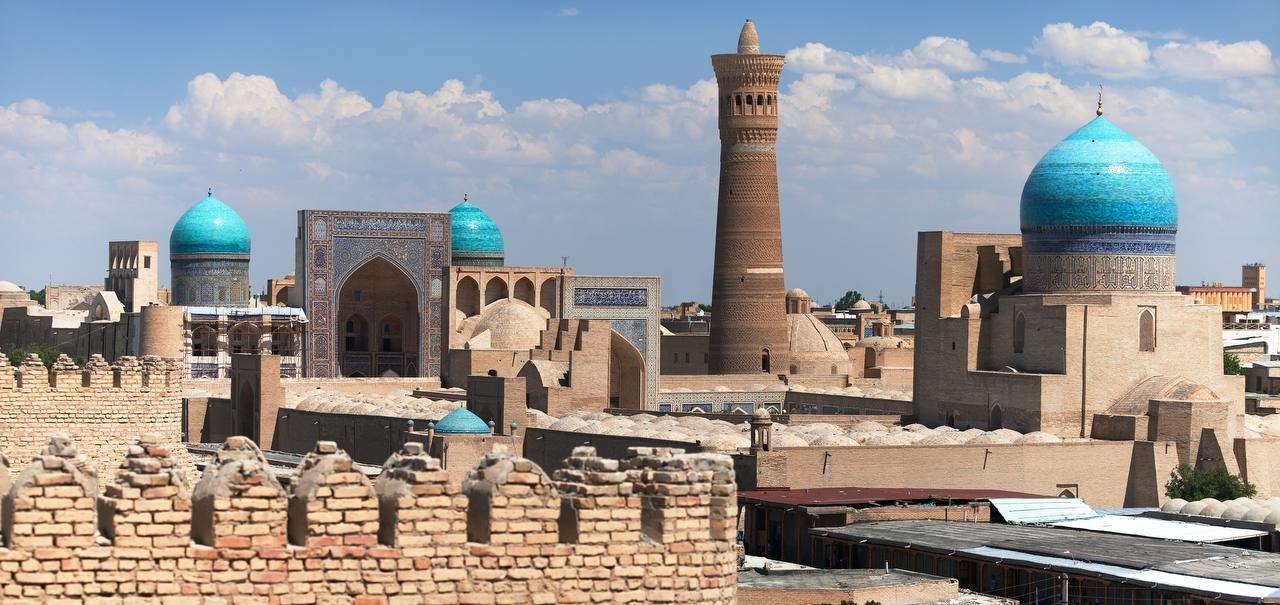
"Kalyan" means "great" in Persian — and that's no exaggeration. The minaret was built in 1127 on the orders of ruler Arslan Khan, and to this day remains a symbol of Bukhara and one of the most outstanding structures of its kind in the Islamic East.
According to legend, the master builder who laid the foundation mixed the alabaster with camel's milk and waited two years for the mortar to harden into stone. The structure proved so resilient that it withstood even Genghis Khan — the great conqueror, the story goes, was forced to bow before the minaret, declaring that he had never bowed to anyone before, but that this building was so magnificent it deserved a bow.
The minaret served several purposes at once: calling the faithful to prayer, acting as a beacon for trading caravans, serving as a watchtower and — during the darker chapters of the Bukhara Khanate — as a site of public executions. Locals came to call it the "Tower of Death." Today, visitors can climb its 105 internal steps to the top and look out over old Bukhara from a height of nearly 47 metres.