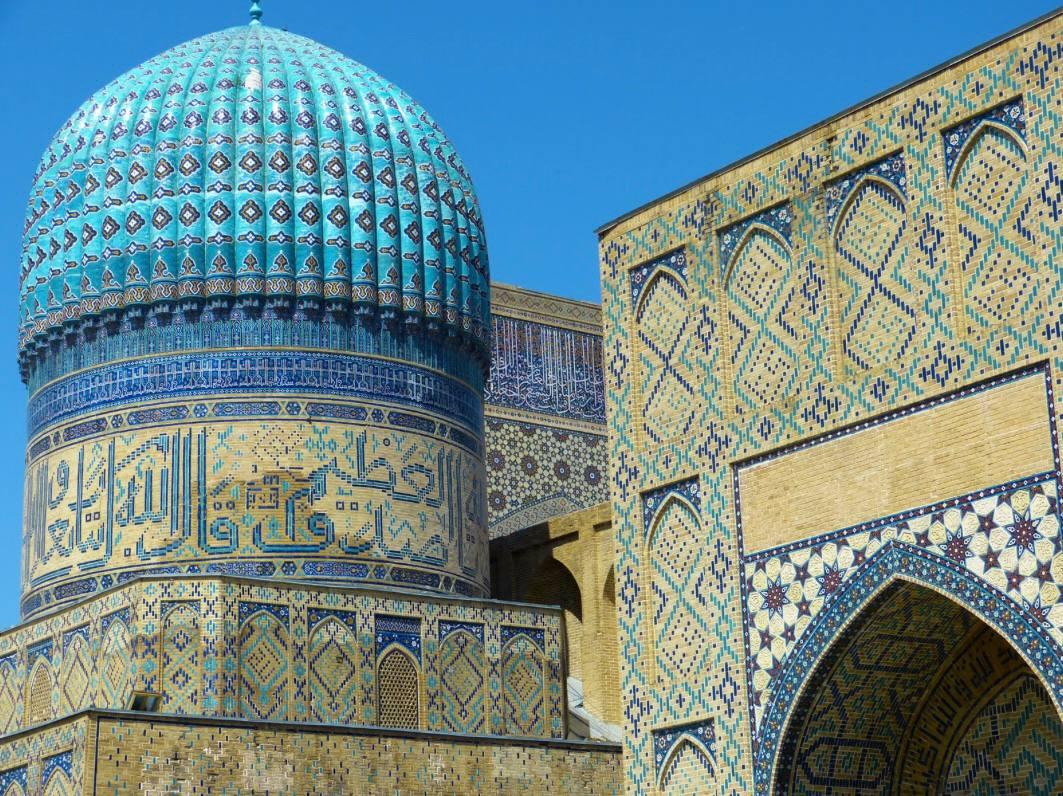
"Bibi-Khanym" means "Lady Empress" — according to legend, the mosque was named in honour of Timur's beloved wife. But behind this beautiful story lies an even more ambitious vision. After his campaign against India in 1399, Timur set out to achieve something unprecedented: building the largest congregational mosque of his time.
The monumental structure was raised in an astonishingly short span — just five years, from 1399 to 1404. Timur spared neither labour nor resources, determined to turn the building into a symbol of his unshakeable power. The mosque's courtyard could hold ten thousand worshippers at once.
But the drive for sheer scale came at a cost: rushed construction and imperfect building techniques left the masonry vulnerable to earthquakes, and cracks began appearing only a few years after completion. The mosque's magnificent arch eventually collapsed in an earthquake. Restored in the 20th century, it remains today one of the most striking monuments of Islamic architecture in all of Central Asia.